
Women’s Rights
We promote equality, dignity, and freedom for all women, everywhere in the world.
In a world still designed primarily by men and for men, women's rights continue to be questioned, ignored or openly violated.
Although the Declaration of Human Rights proclaims the equality of all people regardless of gender, the reality is quite different: in many societies - including our own - women continue to suffer discrimination, abuse and violence precisely because they are women. This is because power is still largely in the hands of men, thus influencing culture, the economy and institutions.
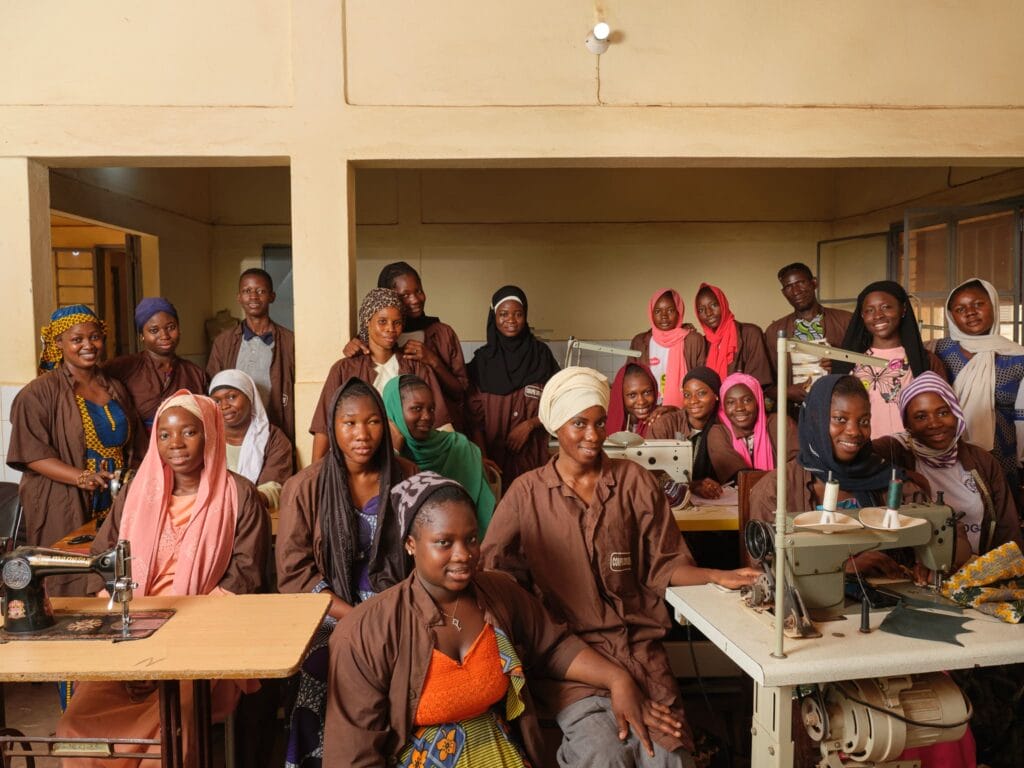
In many societies, girls are seen as an economic burden on families, who often consider early marriage the only solution to reduce their economic difficulties; women are often excluded from political decisions and their role is reduced to that of caregiver, without any economic or social recognition.
From economic independence to the gender pay gap, from the use of language still steeped in stereotypes to violence against women in all its forms, there is still much to be done to guarantee women's rights.
We work every day to promote women's rights and tackle patriarchy, building societies in which gender is not a cage, but an opportunity for free expression.
In Italy, we work to promote women's rights through three fundamental pillars:
These interventions are not separate but reinforce each other to create lasting social and political change. How do we do this?
With our national programme Frequenza200, we tackle early school leaving and support the right to education, especially for people living in fragile contexts. Girls are often the most disadvantaged: relegated to care work and discouraged from continuing their studies, they risk seeing their future compromised.
Among our campaigns to promote women's rights and tackle violence against women is #UNROSSOALLAVIOLENZA, which we have been running for years together with Lega Serie A. On 25th November, the national campaign aims to combat violence against women in all its forms.
With our campaign “Ristudiamo il calendario” , launched together with the duo Mammadimerda – an irreverent and ironic project on motherhood founded by Francesca Fiore and Sarah Malnerich – we are calling for a new school timetable. The goal is to guarantee more educational opportunities and tackle summer learning loss (the loss of knowledge and skills that occurs during the long summer break), but also to lighten the burden of care that continues to weigh almost exclusively on mothers, limiting the autonomy and rights of women. Find out more
The WeWorld Festival Milan is our annual event which, through talks, art, cinema and photography, sparks debate on fundamental issues such as feminism and women’s rights, consent, language, gender pay gap, motherhood, social and environmental justice, women's empowerment. Find out more
We raise awareness on issues crucial to women's rights — from menstrual justice to gender stereotypes in language, from violence to harassment at work — because we believe that understanding them thoroughly is essential to addressing them effectively. This is why our investigations and the work of the Study Centre are strategic and fuel all our actions.
We also support women's participation in public life and their leadership in STEM (science, technology, engineering and mathematics) roles, promoting inclusive environments free from stereotypes. In this regard, we also collaborate with Italian companies to promote diversity and women's rights. In addition, we participate in sporting events that combine activism and solidarity against gender-based violence.
Gender and generational inequalities are more severe in fragile contexts, where economic and humanitarian crises compound and further limit rights and opportunities. Our report Her Future at Risk, which analyses the situation of women and girls in eight countries affected by protracted emergencies, confirms how widespread this gap remains in many parts of the world. Read also Her Future at Risk. Focus Ukraine. The report explores the gendered impact of WASH response in Ukraine. It highlights how the conflict has deepened inequalities and reshaped gender roles and decision-making power.
We work in over 20 countries to promote women's rights and ensure they have opportunities for participation, autonomy and security. We do this by adopting a gender-transformative and women's voice-based approach, which goes beyond responding to immediate needs and aims to transform the structures that generate inequality.
Integrating a gender perspective into every action means working on cultural norms, power relations and everyday practices, creating the conditions for lasting change. Above all, it means amplifying the voices of women and girls so that they can participate, make decisions, exercise their rights and help change the narratives that define gender roles in their communities.
In Afghanistan, for example, which ranks last in the Child Fund World Index 2024 (formerly the WeWorld Index) with regards to women's rights, we work in rural areas alongside female heads of households, offering tools and opportunities to improve their living conditions in an extremely complex context.
In Ukraine, where we have been present since the beginning of the conflict, alongside those who have lost everything, we take a gender-transformative approach: we promote equal opportunities and autonomy for women, strengthening their autonomy, dignity and safety in WASH (water, sanitation and hygiene) services. Actively involving women and girls means ensuring safer services, more accessible schools and more resilient communities.
In Kenya, Tanzania and Mozambique, we support grassroots peace-building processes through the active involvement of young people, local communities and, in particular, women. With the Kujenga Amani Pamoja (“Let's build peace together”) project, we promote youth and female participation along the Swahili coast, the border area between the three countries, strengthening the role of women as social leaders, mediators in conflicts and bearers of cohesion and peace. Through art, dialogue and community initiatives, we encourage cultural practices of mutual respect, inclusion and dialogue, offering spaces where differences become resources.
In this context, a project was created that combines fieldwork with participatory communication: a photography course conducted with young women from local communities, giving them the opportunity to explore and express their perspective on the world. This process led to Women See Many Things, the photography project presented at Fotografia Europea 2025, with over 180 photographs taken by more than 30 women between the ages of 18 and 35. The images not only reflect the complexity of their lives, but also become a tool for awareness and change, an invitation to challenge stereotypes and assert their place in the world.
Water and women's rights Access to safe, drinking water and sanitation (WASH) is essential for promoting women's rights. In countries where clean water is not available in homes, it is often women and girls – in about 8 out of 10 families – who are responsible for collecting water on a daily basis, taking time away from their studies, work and social participation. During these long journeys, especially in isolated or unprotected areas, the risks of gender-based violence also increase. In contexts marked by conflict and protracted crises, such as Palestine, the situation is even more critical: the lack of safe sanitation facilities, structures without locks or adequate lighting, exposes women and girls to serious threats to their safety, health and dignity. Menstrual justice is an integral part of women's rights. The lack of essential hygiene products, such as sanitary pads or soap, and the presence of toilets that are not separated by gender or lack minimum safety conditions, compromise menstrual cycle management and increase risks to sexual and reproductive health. Globally, an estimated 500 million people do not have access to safe spaces and adequate products to manage their menstruation with dignity. We work in several countries around the world to improve access to water and WASH services, thereby helping to strengthen women's rights, promote gender equality and ensure a more equitable and sustainable future for all communities. Read also “enCYCLEpedia. The Things You Should Know About Menstrual Justice”, which builds on and expands the Italian publication, providing a comprehensive overview of the key global challenges in achieving menstrual justice, while exploring possible solutions for real change.
Discover more
Our annual event uses talks, art, cinema, and photography to spark debate on fundamental issues such as gender equality and women’s rights, human rights, and social and environmental justice.

In Rome, Naples, Pescara, Milan, Cosenza, and Bologna, we support women facing violence or difficult circumstances on their journey toward self-determination.

We work in Italy and around the world to ensure that all people who menstruate experience menopause have the freedom, knowledge, and resources to manage their health and bodily autonomy with dignity and without stigma.

Discover our format, inspired by the long-standing traditions of debate and discussion within feminist movements. It’s an informal and safe space to explore topics such as women’s rights, gender-based violence, motherhood, sexuality, the gender pay gap, and much more.

Case Studies on Natural Resource use, Waste Management and the circular Economy Practices in Kwale, Nairobi and Isiolo, and County