What is violence against women?
Violence against women is now recognised as a violation of human rights in all its forms.
It is neither an isolated phenomenon nor a private matter: it is a structural and systemic problem that permeates our society and affects women at every stage of their lives, limiting their well-being, freedom, participation, health, opportunities and fundamental rights.
The United Nations Declaration on the Elimination of Violence Against Women (CEDAW) defines violence against women as ‘any act of gender-based violence, or the threat of such acts, that results in, or is likely to result in, physical, sexual or psychological harm or suffering, coercion or arbitrary deprivation of liberty, whether in women's public or private lives’.
Violence against women can take many forms:
- Physical: assault, battery, intimidation.
- Psychological and emotional: humiliation, threats, isolation, manipulation.
- Economic: control of money, barriers to employment, exploitation.
- Sexual: coercion, abuse, forced sex, harassment.
- Digital: online stalking, non-consensual dissemination of data and images, control through technology.
- Symbolic: language, stereotypes and narratives that normalise inequality.
These forms are not separate, but tend to overlap and reinforce each other. Recognising them is essential to protect those at risk and to promote profound cultural change.
Violence against women, and gender-based violence more generally, undermines equality, hinders social and economic development, and profoundly affects the quality of life of entire communities. For this reason, at WeWorld, we have been committed for over fifty years to preventing and combating violence against women and providing concrete support to those who suffer it, in Italy and around the world.
We do this by following a gender-transformative approach, through which we integrate the gender perspective into every action and project, in every community and in every context.
Adopting a gender-transformative approach means working on cultural norms, power relations and everyday practices to ensure that change is lasting and structural. It means creating spaces where women and girls can participate, guide decisions, exercise their rights and have an impact in their communities, while at the same time changing the narratives and expectations that govern gender roles.
Data on violence against women in Italy
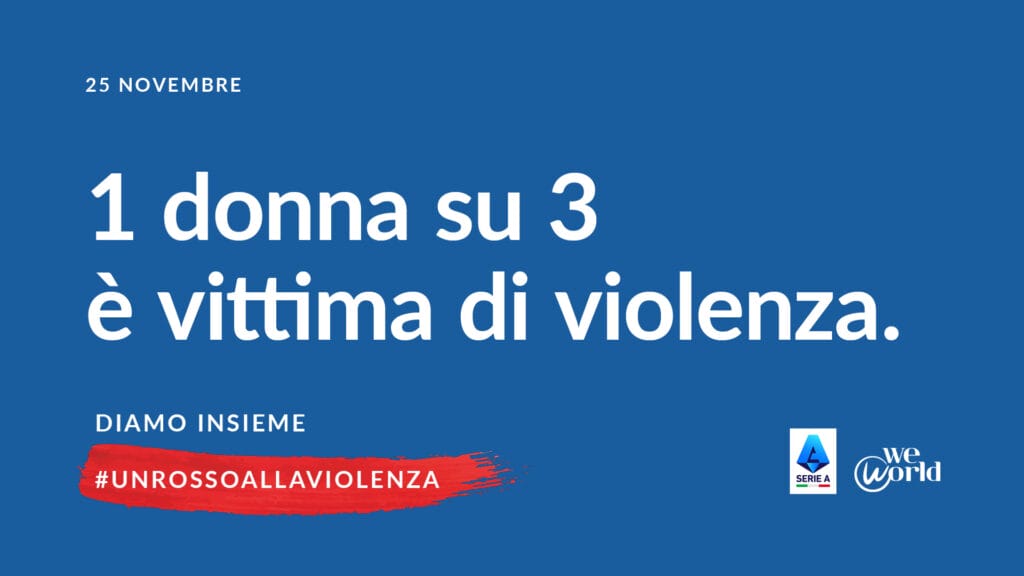
In Italy, violence against women remains a widespread phenomenon. The latest ISTAT data confirm the seriousness of the situation: 7 million women, or one in three, have experienced some form of harassment or violence in their lifetime. In addition, one in two women (49%) report having experienced at least one episode of economic violence, one of the least visible but most pervasive forms of violence because it limits autonomy and choice.
The most serious forms of violence are perpetrated by partners, ex-partners, relatives or friends: they therefore occur in family or relational spaces, where control is more difficult to recognise and report. Domestic violence remains the most widespread, across all ages, backgrounds and socio-economic levels. For this reason, our work focuses both on direct support for women experiencing violence or vulnerability, and on prevention and education, so that each person is empowered to recognize the signs, ask for help, or take action to achieve self-determination.
Our commitment in Italy
In Italy, our work against gender-based violence and for women's rights is carried out on several fronts, with actions that combine prevention, awareness-raising and advocacy. Through national campaigns, research, cultural events, sports initiatives and activities in schools, we are committed to bringing about change that involves institutions, communities, families and new generations.
For over 10 years, we have been carrying out daily prevention, support and awareness-raising work in our seven Spazi Donna WeWorld (WeWorld Women's Spaces) – in Milan (Giambellino and Corvetto), Bologna, Rome, Naples, Pescara and Cosenza. These are safe, welcoming places run by female staff, where women in vulnerable situations – along with their children – can be listened to and supported. Here, they can access psychological support, career guidance, cultural workshops, and courses designed to strengthen self-esteem, independence, and decision-making skills. All activities and services are offered free of charge to ensure full accessibility.
Tackling violence also means working on culture, education and public policy. This is why we invest in awareness-raising and advocacy initiatives that also target hard-to-reach or less aware audiences. We engage with different contexts – institutions, communities, meeting places – to create spaces for discussion, highlight stereotypes and promote real and inclusive change.
To bring attention to spaces where violence against women often goes unnoticed—such as football—we turn 25th November into a day of collective awareness. Through the #UnRossoAllaViolenza campaign, created in collaboration with Lega Serie A, stadiums become powerful platforms against violence: during the championship weekend, the red card gesture becomes a symbol, players and referees take the field with a red mark on their faces, captains wear a dedicated armband, and special content is projected before kick-off. A simple, immediate action that reaches millions and encourages everyone to take a stand.
With our campaigns, we also want to have an impact on areas closely linked to gender-based violence, such as educational inequalities, which contribute to limiting opportunities for women. With the Ristudiamo il calendario (Let's rethink the calendar) campaign, we launched a national petition calling for a reform of school hours to make the school calendar more equitable, reduce regional disparities and provide concrete support for the burden of care that still falls mainly on mothers.
We promote cultural dialogue through local events where we meet people and try to stimulate reflection and debate. The main ones are:
- our WeWorld Festivals in Milan and Bologna, events where we put gender equality, women’s rights, and empowerment at the center of public debate.
- Our Chiacchierata femminista (Feminist Chat) format: an intimate and inclusive dialogue format that fosters non-judgmental discussion on stereotypes, violence, body image, and social co-responsibility, providing concrete tools and up-to-date data to help interpret everyday life.
Our commitment also extends to sport, which has the power to engage different communities. That is why we collaborate as a Charity Partner in events such as StraWoman, Spinathlon and the Milan Marathon, mobilising citizens in support of our WeWorld Women's Spaces.
We also work in schools, where we promote sex and relationship education, which are fundamental tools for preventing violence and building relationships based on mutual respect. In 2025, we listened to over 300 students from all over Italy. The survey revealed that only a small proportion receive clear information at school, while many false beliefs and gaps in knowledge about menstrual health, contraception and sexually transmitted diseases persist, highlighting the urgent need to invest in comprehensive education that is accessible to all. We complement the cultural and community dimension with the research work of our Study Centre, because reliable data is essential for guiding effective policies and raising public awareness. In the report Non staremo al nostro posoto (italian version only) , produced using previously unpublished data collected in collaboration with Ipsos, we highlight how harassment, abuse, and mobbing in the workplace disproportionately affect women and young people. Female workers are especially vulnerable to sexual, psychological, and discriminatory violence, closely tied to gender inequalities, power dynamics, and corporate hierarchies.
Our commitment to tackle violence against women around the world
In the countries around the world where we operate, we work to ensure that the rights of women and girls are recognised and protected in contexts marked by crisis, poverty and inequality, where harmful practices such as early and forced marriage and female genital mutilations still persist.
As we highlight in our Atlas Claiming Space. Atlas on Women's and Girls' Rights, in many regions of the world, women are responsible for the daily management of natural resources — such as water, wood and agricultural land — but almost never have control over these same resources. This invisibility, rooted in patriarchal norms and unequal institutional structures, is further intensified by climate and humanitarian crises, which increase workloads, risks, and forms of exclusion. It is in this tension between centrality and marginality that one of the most urgent challenges of our time unfolds: the rights of women and girls are at a moment of both tremendous potential and extreme fragility.
With this in mind, we implement programmes that place women and girls at the centre of decision-making processes, promoting inclusive governance, female leadership and gender justice. We operate in several countries — including Lebanon, Kenya and Tanzania — where we run centres dedicated to women and children, offering psychological, medical and legal support, educational courses, safe listening spaces and economic inclusion programmes.
In Afghanistan, where we have been operating since 2002, we promote gender-sensitive humanitarian assistance in a context that is highly restrictive of women's rights. Women are not only beneficiaries but also participate in the design and implementation of programmes.
In Mali, an integrated approach combines protection, economic inclusion and women's leadership: in the new one-stop assistance centres, women who have survived violence can access medical, psychological and legal support, becoming agents of change in their own communities.
In Palestine, where we have been present for over thirty years, we support the resilience of the most vulnerable communities by promoting women's participation in decision-making and resource management, in a context marked by occupation and restrictions.
Alongside our work in the field, we focus on prevention and awareness: through campaigns, educational programmes and advocacy initiatives, we spread information on gender-based violence, rights and equality, collaborating with local and international networks to promote more equitable and inclusive policies.
At the same time, our research documents the impact of crises on women and generates knowledge to guide more effective responses.
The report Her Future at Risk. The Cost of Humanitarian Crises on Women and Girls analyses how humanitarian crises amplify gender and generational inequalities and highlights the need to strengthen the role of women and girls in emergency response and recovery processes. Based on data from the ChildFund Alliance World Index 2024, which measures the protection and violations of the rights of women and children, the analysis focuses on eight countries — Afghanistan, Burkina Faso, Ethiopia, Mali, Mozambique, Niger, Palestine and Ukraine — where we work together with ChildFund Alliance.
In addition to shedding light on the status of women and girls' rights in ongoing humanitarian crises, the report is enriched by first-hand accounts from humanitarian workers, activists, women and girls involved in our programmes.
Support us
Violence against women is not only physical: it can also be sexual, psychological, economic or stalking. It is present in the workplace, in relationships, in jokes, in silence.
Support our Spazio Donna WeWorld programme and become part of the network that supports women.