We use technical cookies, which are necessary for properly surfing and using the website, and, after receiving the user’s consent, our own analytical and profiling cookies (first party cookies) and third party cookies, whose purpose is showing advertising linked to users’ preferences, starting from their profile and surfing habits. You can configure or reject cookies by clicking “Cookie settings”. Additionally, users can accept all cookies pressing the “Accept All Cookies” button. For further information, please review our cookies policy.
Privacy Preference Center
Your privacy
We use technical cookies, which are necessary for properly surfing and using the website, and, after receiving the user’s consent, our own analytical and profiling cookies (first party cookies) and third party cookies, whose purpose is showing advertising linked to users’ preferences, starting from their profile and surfing habits. You can configure or reject cookies by clicking “Cookie settings”. Additionally, users can accept all cookies pressing the “Accept All Cookies” button. For further information, please review our cookies policy.
Strictly necessary cookies
Strictly necessary cookies
Always active
These cookies are necessary for the Platform to function properly and cannot be disabled on our systems. They are usually set to respond to users' actions to receive services like, for example, configuring privacy settings, starting the website session and filling forms. The user can configure the browser so as to stop or indicate the presence of these cookies, but some features of the Platform will be unavailable.
namebluelabs-gdpr
host@
duration1 year
typePreferences
nameHSID
host.google.it / .google.com
duration2 years
typeFunctional
nameSIDCC
host.google.it / .google.com
duration1 year
typeFunctional
Analytical Cookies
Analytical Cookies
Analytical cookies are a tool for calculating the visits and analyzing the origin of traffic in order to measure and improve the performance of our Platform. Through them, we monitor the most or the least popular pages and track the number of visitors to the website. If you do not authorize the use of these cookies, we do not know when you visit our Platform.
name_ga
host@
duration2 years
typeAnalytics
name_gid
host@
duration1 day
typeStatistics
name_hjAbsoluteSessionInProgress
host@
durationsession
typeAnalytics
name_hjFirstSeen
host@
durationsession
typeAnalytics
name_hjSession_2264770
host@
durationsession
typeAnalytics
name_hjSession_
host@
durationsession
typeAnalytics
name_hjSessionUser_2264770
host@
durationsession
typeAnalytics
name_hjSessionUser_
host@
durationsession
typeAnalytics
name_hjIncludedInPageviewSample
host@
duration30 minutes
typeStatistics
nameajs_anonymous_id
host@
duration1 year
typeStatistics
name__Secure-ENID
host.google.it / .google.com
duration13 months
typeStatistics
Marketing Cookies
Marketing Cookies
Marketing cookies are used to track visitors on websites. Their purpose is showing ads that are relevant and absorbing for individual users, so more valuable for third-party advertisers and editors.
name_clck
host@
duration1 year
typeMarketing, Tracking
name_ga_K6W02TJ913
host@
duration2 years
typeAdvertising
name_gac_UA-*
host@
duration90 days
typeAdvertising
name_gcl_au
host@
durationpersistent
typeAnalytics, Advertising
name_gcl_aw
host@
durationpersistent
typeAnalytics, Advertising
nameAPISID
host.google.it / .google.com
duration2 years
typeAdvertising
nameCONSENT
host.google.it / .google.com
duration20 years
typeAdvertising
nameDSID
host.google.it / .google.com
duration2 years
typeMarketing, Tracking
nameHSID
host.google.it / .google.com
duration2 years
typeMarketing, Tracking
nameNID
host.google.it / .google.com
duration2 years
typeMarketing, Tracking
nameSID
host.google.it / .google.com
duration2 years
typeMarketing, Tracking
name__Secure-3PSIDCC
host.google.it / .google.com
duration2 years
typeAdvertising, Marketing, Tracking
name__Secure-3PSID
host.google.it / .google.com
duration2 years
typeAdvertising, Marketing, Tracking
name__Secure-3PAPISID
host.google.it / .google.com
duration2 years
typeAdvertising, Marketing, Tracking
name__Secure-1PAPISID
host.google.it / .google.com
duration2 years
typeAdvertising, Marketing, Tracking
name1P_JAR
host.google.com
duration1 month
typeMarketing, Tracking
nameMUID
host.clarity.ms
duration1 year
typeMarketing, Tracking
nameSM
host.clarity.ms
duration1 year
typeMarketing, Tracking
nameuuid2
host.adnxs.com
duration2 years
typeMarketing, Tracking
nameanj
host.adnxs.com
duration2 years
typeMarketing, Tracking
Third party cookies
Third party cookies
They are set by a different website from the one that you are currently visiting. This is due to the fact that a website can contain elements (images, maps, sounds, specific links to webpages of other domains, etc.) that are based in different servers from the server of the website that you are currently visiting.
Humanitarian aid in Afghanistan: our response to the crisis
We have been working in Afghanistan since 2002 on projects designed to support the most vulnerable groups. Following the Taliban’s return to power in 2021, we decided to resume our activities the following year to ensure access to essential services, particularly for female-headed households, children and girls.
The emergency in Afghanistan
The humanitarian crisis in Afghanistan represents one of the most critical situations globally, exacerbated by decades of conflict and recurring political and economic instability. Following the return of the Taliban government in August 2021, the situation deteriorated drastically, leading to the suspension of international development aid and the collapse of essential public services.
In 2023, Afghanistan had one of the highest rates of food insecurity in the world, with 80% of households living on less than a dollar a day. The situation has been further exacerbated by recurring natural disasters: the 2023 earthquake in Herat province left tens of thousands of people homeless, whilst the earthquake in August 2025 in the eastern provinces of Kunar, Nuristan, Laghman and Nangarhar caused widespread devastation in remote areas, blocking major roads and isolating affected communities.
Over 28 million people are in need of humanitarian assistance, with women, girls, children and female-headed households among the most exposed and vulnerable groups. The lack of access to essential services such as food, drinking water, medical care and protection remains a structural problem.
Restrictions on the rights of women and girls in education, the workplace and public life life have further compromised the humanitarian response and recovery efforts.
WeWorld's offices and areas of intervention in Afghanistan
What we are doing to deliver humanitarian aid in Afghanistan and ensure protection
Our operations are organised through a significant on-the-ground presence: a coordination office in Kabul, a field office in Herat province and an outpost in Kunar. We currently work with 36 local staff members and collaborate with 3 local partners to implement multi-sectoral interventions in the three provinces covered by our programme.
Over the course of a year, we have reached over 32,000 people, 81% of whom are women and children. Our interventions include:
Food assistance and livelihoods: we distribute food aid through Cash for Food programmes, primarily targeting female-headed households in remote rural areas. We have also launched training courses to improve skills in crop and livestock production, addressing the challenges posed by climate change.
Housing construction and post-earthquake recovery: we have built 30 basic housing units for families affected by the 2023 earthquake in Herat province, using resilient construction methods that involve local communities. In addition, we provide cash assistance for home repairs to families affected by the 2025 earthquake in Kunar.
WASH services: we have rehabilitated water systems, built latrines and distributed water purification kits in the communities most affected by the earthquakes, ensuring access to safe sanitation and drinking water.
Vocational training and economic empowerment: we promote vocational training in the production of washable and reusable sanitary pads for young Afghan women, creating opportunities for employment and entrepreneurship. We offer counselling in financial literacy and entrepreneurship to foster the economic independence of women and young people.
Crisis preparedness and disaster risk reduction: we conduct training to strengthen local capacities for proactive response to recurring crises caused by climate shocks.
The crisis through the eyes of those experiencing the emergency in Afghanistan
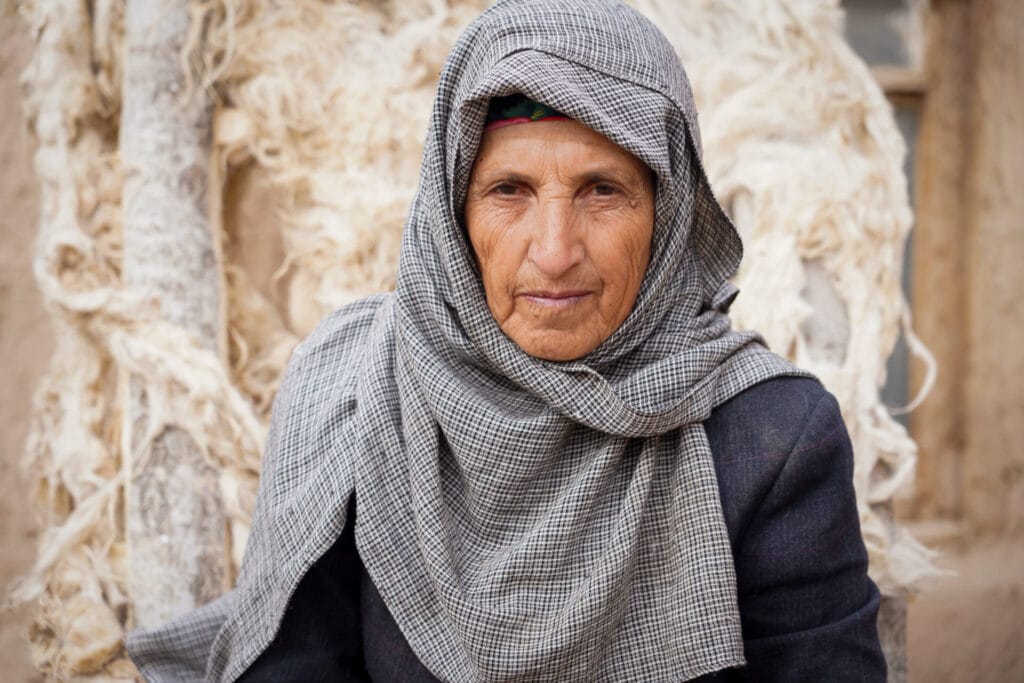
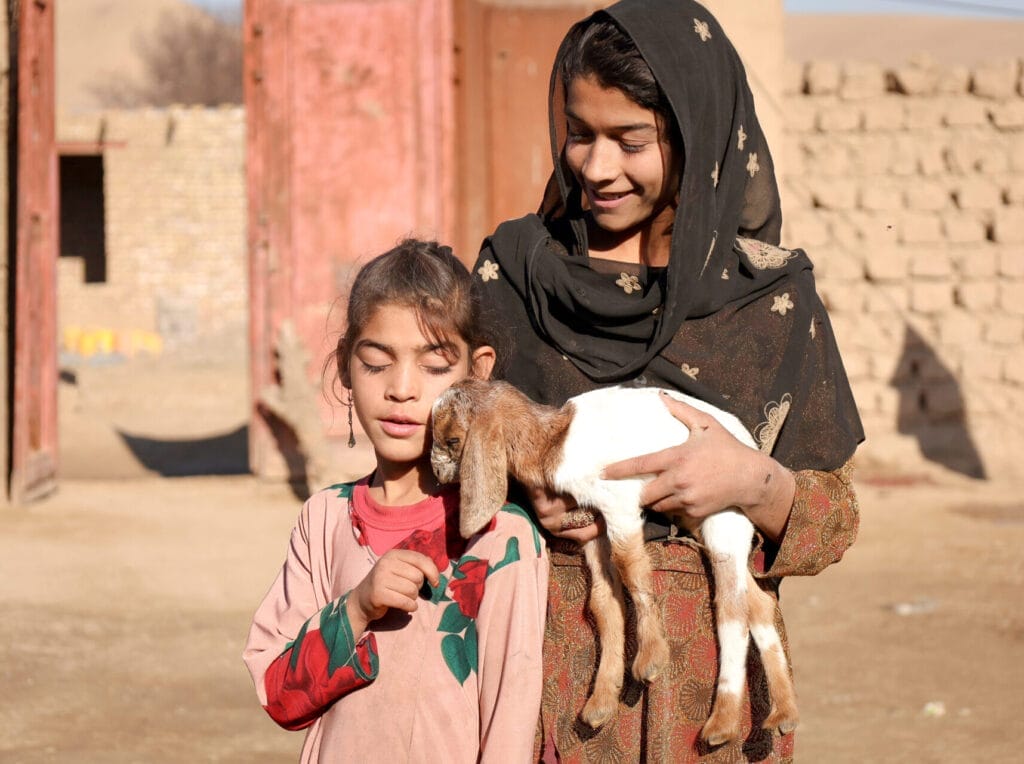
Behind every humanitarian intervention lie personal stories of resilience and strength from those who face the consequences of the crisis on a daily basis. We highlight the testimonies of affected communities in Afghanistan, often overlooked by media narratives.
In 2025, our team documented stories of resilience from the hardest-hit areas, from Herat province to the remote communities of Kunar. We gathered the voices and experiences of women, children and families who continue to build their future despite extreme adversity. These visual and narrative accounts were presented at the WeWorld Festival 2025 in Milan through the photographic project ‘A Daily Struggle in Herat’ by Jafar Mosavi, an invitation to look closely, listen without prejudice and recognise the quiet strength of Afghan women who, every day, continue to create possibilities.
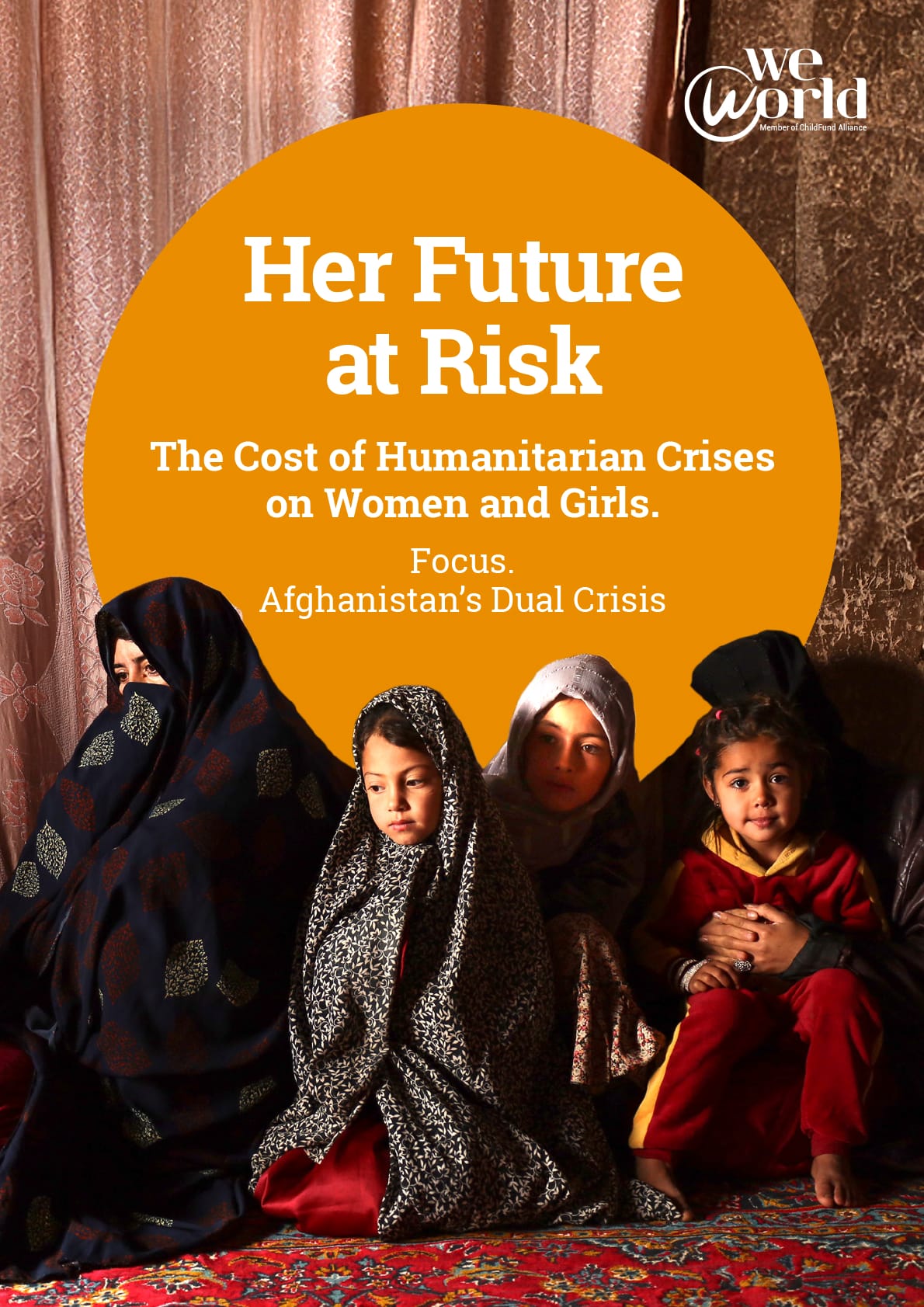
Furthermore, the research produced by the Research Centre offers a direct and documented insight into the reality experienced by the affected communities, highlighting the consequences of the crisis and the urgent needs that remain unaddressed. Among the most recent studies, “Her Future at Risk – Focus Afghanistan” analyses how the humanitarian crisis exacerbates existing gender inequalities and the crucial role of women in the country’s response and reconstruction.
WeWorld's intervention in Afghanistan is possible thanks to the support of ChildFund Australia, ChildFundKorea, Italian Agency for Development Cooperation (AICS)and many companies and people who are supporting us.
Her Future at Risk. The Cost of Humanitarian Crises on Women and Girls
The report “Her Future at Risk. The Cost of Humanitarian Crises on Women and Girls” examines how humanitarian crises exacerbate existing gender and generational inequalities, particularly in fragile contexts and protracted crises, highlighting the importance of empowering women and girls in crisis response and recovery.