
Humanitarian aid in Libya: our intervention
We have been present in Libya since 2018, with a coordination office in Tripoli. In a country marked by over a decade of political instability and conflict, our work focuses on populations in the most vulnerable conditions, internally displaced people, refugees, migrants, women and youth, ensuring their access to basic services, promoting human rights and strengthening community resilience. We operate across the three regions of Tripolitania, Cyrenaica and Fezzan.
The crisis in Libya
Libya has endured over a decade of deep political and institutional fragmentation, with power divided between competing administrations in the west and east of the country. The political environment remains fragile, with risks of renewed violence, military escalation and deep mistrust among factions. The prolonged conflict has had severe consequences on Libyan society: 780,000 people are currently caught up in internal and international migration flows. Groups in vulnerable conditions face high protection risks, further aggravated by the influx of refugees from neighbouring conflicts, including those fleeing Sudan. Access to basic services such as healthcare, education and social protection remains limited, particularly in conflict-affected areas.
Humanitarian operations contend with complex challenges: insecurity, limited access, protection risks for displaced populations and the difficulty of strengthening local resilience. Despite this context, we remain operational and committed to our mission on the ground.
What we are doing to bring support and ensure protection
We have been operating through a coordination office in Tunis and a national office in Tripoli, in close contact with local authorities and communities. Our approach is multi-sectoral and aims to build resilience, social inclusion and cohesion within affected communities.

On the healthcare front, we have ensured access to paediatric care through mobile units,staffed by gynaecologists and paediatricians, and the distribution of medical equipment, medicines and consumables to paediatric hospitals in Tripoli and Al Baida. We also work to strengthen healthcare infrastructure and build the capacity of medical personnel.
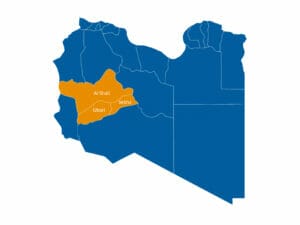
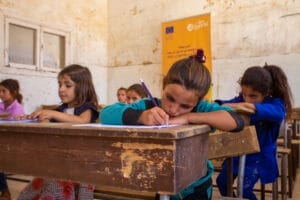
Regarding access to basic services, we work on the rehabilitation of schools and essential infrastructure, the training of local personnel and the promotion of equitable access to education, water and sustainable energy. Through the ongoing AQUA project, we are improving equitable access to safe drinking water and sanitation services for host communities in the areas of Brak al Shati and Al Boanees, in southern Libya.
Environmental sustainability and disaster risk reduction are crosscutting priorities across our intervention: we have improved solid waste management and sewage systems in Al Baida, introduced GIS mapping tools, built flood management infrastructure and conducted climate change awareness campaigns, engaging civil society and academic institutions through participatory forums.

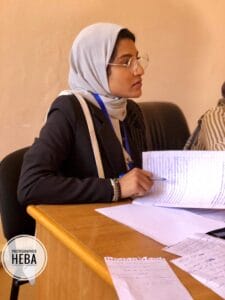
On the vocational training and employment front, through the ongoing WAZIF project, we support youth and women in the municipality of Tripoli with technical training pathways in innovative sectors, including photovoltaic system installation and the ethical and sustainable fashion industry, alongside more traditional sectors such as accounting and language skills. The goal is to create decent work and self-employment opportunities, with an explicit link to the green transition.
Gender equality and inclusion are mainstreamed across all projects: women, youth, people with disabilities and other groups in vulnerable conditions are at the centre of our interventions, with the aim of ensuring equal access to services and opportunities.