564 results found
 Provision of reliable and sustainable public water services
Recognizing the scarce resources and increasing water needs of the Lebanese communities and Syrian refugees , alongside the need for a sustainable management of the water available in Lebanon, the project adopts a social engineering approach to apply the international best practices, adapting public services to the specific context of the country, in order to […]
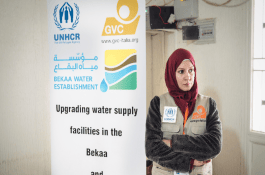 Provision of reliable and sustainable public water services
In the Bekaa Valley, the scarcity of water resources and the increase in demand from the Lebanese communities and Syrian refugees have led to the need to promote sustainable management of available resources. GVC intends to improve demand management and cost recovery in the water sector, to make public water provision sustainable. In collaboration with […]
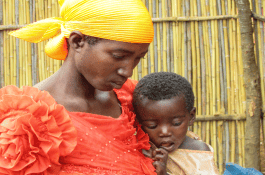 Strengthening maternal healthcare quality at national level in humanitarian contexts
Population growth in Burundi is 3,7% on average, with a fertility rate of 5,9 children per woman. The Demographic and Health Survey of 2017 (EDS III – 2017) shows that every year 712 women on 100.000 childbirths die during or after the delivery, this is due to the insufficient access to healthcare, lack in managing […]
 Advocating Cambodian migrants’ Gender to prevent violations and human trafficking.
In the last years, more than one million Cambodian migrants have been forced to cross the border toward Thailand, due to lack of work and poverty. 80% migrate irregularly as a consequence of scarce information and high costs of access to official channels. Those migrating without documents are exposed to labour exploitation and new slaveries, […]
 A project of home fortification of Zero hunger and improvement of meal quality in primary schools.
Burundi registers a chronic malnutrition rate of 56%, which is caused by a lack of essential micronutrients such as B2 and B12 vitamins, beta carotene, folates, iron, iodine and zinc in the majority of the population. The Country’s development is in danger because of a serious public health issue like chronic malnutrition of children under […]
 Strengthening social stability and creating training and dialogue opportunities among youth.
Almost 20% of the 1,5 million Syrian refugees in Lebanon live in Informal Tented Settlements (ITS) in the Bekaa Valley. This situation implies a deteriorating pressure on local resources, where job opportunities and access to public infrastructures are decreasing. The increasing impoverishment of the Lebanese population and the high vulnerability among refugees are generating high […]
 Human mobility initiative to strengthen services provided to Lebanese and Syrian communities.
In the Lebanese context, due to a progressive arrival of many Syrian refugees, the pre-existing economic issues escalated and the Municipalities are struggling to guarantee an appropriate management and distribution of services. Moreover, there is an increase of social tensions (communal and sectarians) and pressure on the Municipalities which derives from a strong increase of […]
 Assistance to Burundian repatriates.
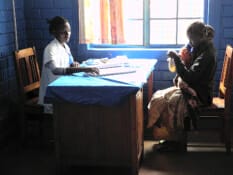
Since the beginning of 2015, more than 400.000 refugees and asylum seekers fled from Burundi due to the humanitarian crisis. Due to the escalation of violence in neighbouring countries during the past year, many Burundian refugees have decided to return to their communities, despite the Zero hunger and economic insecurity. Considering the conditions they are […]
 Medical and nutritional assistance for refugees and asylum seekers in Burundi.
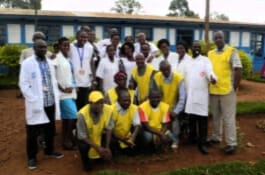
In Burundi, the number of asylum seekers is increasing, due to the Human mobility situations of neighbouring countries, and to the conflicts between Mai Mai rebels and Congo’s armed forces that started last January. Refugees, which are mostly Congolese, mainly reside in the Provinces of Muyinga, Ruyigi, Cibitoke and Bujumbura, where health and nutritional services […]
 Strengthening assistance and social services for elderly and disabled persons.
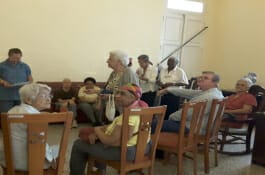
Cuba has an old-age index of 18,3%, therefore, it’s the oldest Country in Latin America. According to the last census, in the next 10 years 15.470 people will turn 60 in Old Havana, consequently diminishing the percentage of children and young people between 0 and 14 years of age. In the last few years, the […]
 Urban resilience to draught: a pilot experience in the city of Santiago de Cuba
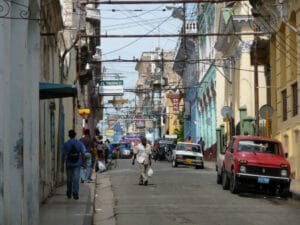
In 2015 Cuba had to face the most severe draught of its history since 1901, with consequences on water supply in the basins that provide Santiago city. Therefore, the project aims to increase risk perception of the phenomenon and acknowledgment of the necessity of adjustment strategies, rational use of water included. The project also proposes […]
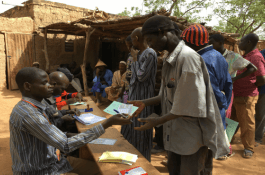 Civil Society and local development: communities fighting for the eradication of hunger.
In the Passoré Province Zero hunger and nutrition security conditions of the rural population are permanently critical. During the rainy season, the Zero hunger provisions of the previous year’s harvest finish, while the new crop has yet to come. This is the most risky period, during which families with little economic possibilities are forced to […]