
The past few decades have been marked by a series of crises, such as economic recessions, the COVID-19 pandemic, escalating extreme weather events (EWEs), the outbreak of new armed conflicts alongside enduring ones, and rising inequalities. These challenges span multiple dimensions - environmental, economic, social, and educational - and those living in the most vulnerable and marginalized conditions remain at the greatest risk of human rights violations.
Rights, opportunities, and the future of individuals should never be determined by gender, age, disability, ethnicity, or geographic origin. Yet today, certain social identities are disproportionately affected by deep-rooted inequalities and discrimination. Among those most at risk of being left behind - trapped in cycles of social immobility - are the younger and future generations, for whom envisioning a better tomorrow is becoming increasingly difficult.
That’s why we are committed to placing young people and future generations at the center of building a fairer world - one where no one is left behind, starting today.
Yet today’s societies are built almost exclusively around adults, overlooking the fact that, by definition, the future belongs to the young. At WeWorld, we work every day to create a world where children and youth are recognized as full rights-holders and where their voices are heard, because they are capable of expressing their needs, fears, and aspirations.
In this landscape of overlapping crises, national and international policies have proven insufficient. The threat of depriving young generations of their future has never been more real. Now more than ever, we must commit to protecting their human rights - including their right to the future.
Why talk about the right to the future?
For us, discussing the right to the future doesn’t necessarily mean recognizing it as a legally codified human right (like the right to individual freedom or education) but rather embracing a new, forward-looking vision of both the present and the future. One that ensures future generations can access the same resources and enjoy the same rights as those living today.
Such concept is gaining increasing attention within the international community. The debate draws on key principles essential to human rights protection and emphasizes how the rights of today’s children and young people are fundamental to building resilient communities capable of facing current and future threats.
We understand the right to the future as the right of individuals and communities - present and future, especially children and youth - to live in and contribute to a world that offers fair and sustainable opportunities for growth, well-being, and development. Our call is to recognize the complexity and interconnectedness of the challenges facing current and future generations, and to build a new intergenerational social pact in response.
Although this right is not (yet) formally recognized in law, it can be derived from various international instruments that have gradually adopted a future-oriented perspective - first and foremost, the UN Convention on the Rights of the Child (CRC, 1989).
In order to derive our understanding of the right to the future, we explored international literature and legal frameworks on development policy, human rights, and children’s rights. From this research, we identified five foundational pillars rooted in a human rights and child rights-based approach:
- Sustainable development: which grounds the intergenerational pact in the principle of ensuring a healthy and safe environment for both present and future generations;
- Intergenerational justice: which acknowledges the need to address inequalities in access to opportunities and rights across different generations.
- Capabilities: a concept that emphasizes how human rights must not only be guaranteed, but also actively exercised and translated into actual opportunities to pursue and achieve personal goals. This means empowering every individual to become an agent of their own change, shaping the future in according to their own aspirations and values.
- Capacity to aspire: the ability to project one’s desires and aspirations into a more or less distant future. In a society still designed primarily around adults - who will not inherit the world of tomorrow - it is essential to reverse the perspective: we must begin with the aspirations of children and youth to imagine the future, even before we build it.
- Child and youth participation: both civic and political, this is a principle enshrined in Article 12 of the CRC. It promotes autonomy and development, and must be integrated into every decision-making and political process to build a future shaped by those who will live in it.
The future through the eyes of young generations
Recognizing - before even guaranteeing - the right to the future for younger generations is not intended as a provocation, but as an invitation to reimagine the social pact from a new perspective: today’s children will inherit tomorrow’s world, and they will bear the consequences of the choices we make today.
At WeWorld, we work every day to ensure that the voices of children and young people are heard and valued. We believe the right to the future is a vital starting point for nurturing their full potential and empowering them to actively shape the world ahead. But to achieve this, we must begin with them - and truly listen.
Together with ChildFund Alliance, an international network we’ve proudly joined since 2021, we’ve collected testimonies from children and youth across 41 countries. Despite their diverse backgrounds, they all emphasized how the challenges they face daily deeply influence their expectations for the future. They are calling for better living conditions, for their rights to be respected - but above all, they are asking to be heard and taken seriously. Because they are ready to lead change and help build a better tomorrow.
“I believe that if we keep working to ensure all children can live well and happily, we will achieve this goal.” (Girl, 12 years old, Spain)
“When I grow up, I will listen to children and their opinions.” (Girl, 14 years old, Kenya)
“I want to inspire others to speak up. I want people to raise their voices and share their opinions so they can be heard.” (Girl, 15 years old, Philippines)
“I think adults should give us the chance to develop our talents. We all have different ones, but even if we know them, we don’t use them or don’t know how.” (Girl, 15 years old, Bolivia)
“Children should be entitled to all rights, and their opinions should be listened to.” (Girl, 13 years old, India)
“Children and youth are the most valuable human resource in the world.” (Boy, 16 years old, Ethiopia)
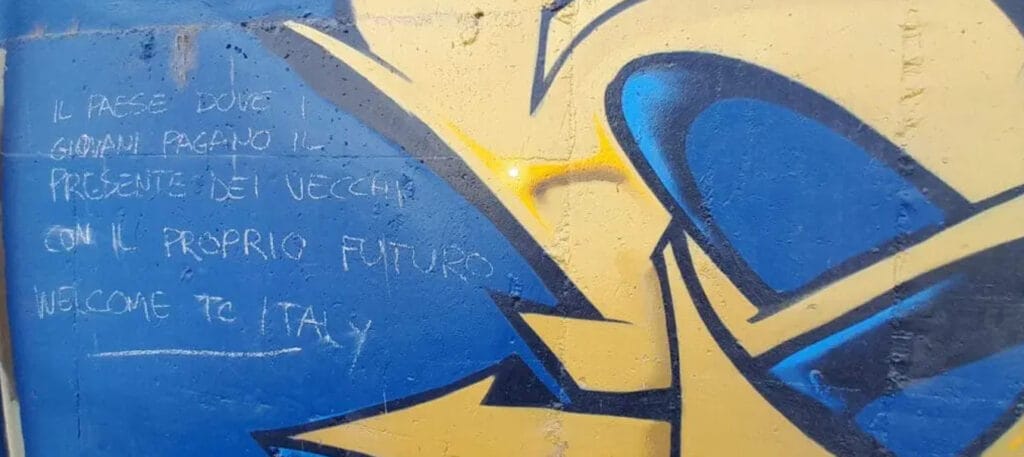
Rights on the margins – Italian children imagine their future
In the summer of 2023, we conducted an online consultation with children and adolescents attending educational centers within our Frequenza 2.00 Program - active in the suburbs of major Italian cities and in remote areas across the country.
When asked about the future, the most frequently mentioned emotions were happiness, anxiety, hope, confusion, surprise, and restlessness. Many also expressed concerns about not being able to achieve their life goals (Rights on the Margins. Putting the future of children and adolescents from Italy’s suburbs back at the center, 2023).
“To me, the future is something close, but I think it will truly begin when I feel like an adult. When I think about the future, I feel good, I feel hopeful, because being an adult means knowing a lot more. I’m afraid of failure and facing personal obstacles that might stop me from reaching my dream of becoming a doctor. People often think surgery is a job for men, and I don’t want to face barriers just because I’m a girl.” (Girl, Aversa)
“When I think about the future, I believe it will come when I’m more mature, when I have responsibilities, maybe in five years. When I think about it, I feel anxious and scared because I’m afraid I won’t find the job of my dreams.” (Boy, Milan Barona)
Children and young people shared their thoughts, expressing the emotions, fears, and aspirations they hold for the future. They called on the adults in their lives not only to listen, but to transform their words into meaningful action. Nearly 1 in 5 told us they believe Italy is not a country that truly cares for the future of its children and youth. According to them, key areas that must be improved to guarantee their right to the future include education, family economic conditions, and climate change. They also asked for more opportunities for leisure and more spaces to socialize.
“I wish we had better schools.”
“I’d pay more attention to climate issues.”
“Adults should help children and young people develop their talents.”
“I’d give money and a home to people in need.”
“I wish we could do everything.”
“I’d like more places to meet and hang out.”
We want to help build the future too!
Children and young people continue to face significant barriers to participating in decisions that affect their lives, especially those from vulnerable and marginalized communities. Many public policies are still developed without taking their perspectives into account. This lack of inclusion leads to short-sighted government actions that are unsustainable in the long term and inappropriate to address today’s challenges. Ensuring the active participation and engagement of children and youth is a fundamental principle for respecting and fully realizing their human rights.
In practice, the right to the future must be reflected in genuinely intergenerational policies - shaped through meaningful consultation with younger generations to respond to their needs, desires, and aspirations. To make this a reality, we must promote youth leadership by institutionalizing formal mechanisms of participation (such as children’s parliaments and youth councils) and by providing them with the necessary resources and authority. Youth participation should be embedded in both local and national legislation, supported by dedicated funding for participatory activities. It should also be reinforced through intergenerational budgeting practices that assess the impact of policies across age groups.
Participation, however, is a skill that must be cultivated. In this context, it is essential to invest in children’s and young people’s capacity to participate through training, mentorship, and support programs. We also need to develop indicators and tools to regularly monitor and evaluate participatory initiatives, ensuring that children’s feedback is taken seriously and that the outcomes of their involvement are visible and transparent.
As we witness every day in our work, the new generations are eager to contribute - to dialogue, to decision-making, and to shaping the future with their ideas, values, and solutions. But they must be given the conditions to do so - just as the Convention reminds us.
A call to adults for a world that fit the new generations
Thinking in terms of legacy and acknowledging the need for a new intergenerational pact is essential. Today’s children and adolescents will become tomorrow’s adults, and they will face the consequences of the choices we make today. To empower them to actively shape the future they envision - a future they are capable of building and have every right to pursue - we must create the conditions for their voices to be heard, valued, and respected in the effort to build a fairer world.
Our social systems and cultural norms remain too focused on adult needs, often failing to recognize children and young people as full rights-holders, capable of advocating for their own priorities. This form of “adultism” - the tendency to prioritize adult perspectives and overlook power dynamics in intergenerational relationships - not only excludes younger generations from public discourse, but also limits our collective potential for progress.
True change requires adults to shift their perspective, embracing the views of younger generations with openness and curiosity. It means creating spaces and mechanisms that allow children and youth to actively participate in decisions that shape their future.
If we aim for a fairer and more sustainable tomorrow, we must start by upholding their fundamental rights, as outlined in the Convention on the Rights of the Child.
Every decision must center their well-being and their voice - because when we truly value the needs and aspirations of the new generations, we don’t just improve their future, we improve our own.