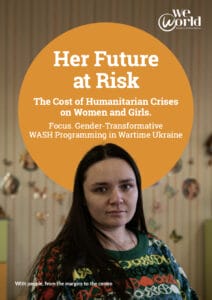
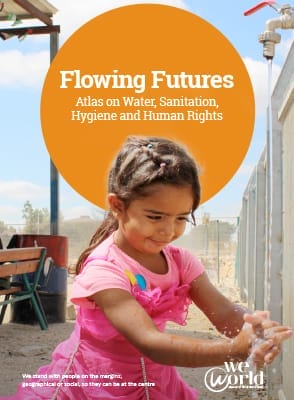
What If WASH Changed Us? Exploring the Potential of Gender-Transformative WASH
This paper argues that WASH can be gender-transformative when it is designed not only to improve access to water, sanitation and hygiene, but also to address the distribution of labour, authority, resources and safety that shapes unequal access to those services.
Drawing on our vidence from internal mapping, country programmes and thematic studies, it shows that the organisation has a strong gender-sensitive foundation and a number of practices that point towards more transformative programming, while also identifying the barriers that prevent this approach from becoming systematic: short funding cycles, limited budgets for norm change, weak indicators of shifts in power, and decision-making structures that often sit beyond the community level.
The central issue is therefore not only whether WASH interventions can include women and girls more effectively, but whether they can change the arrangements that have made their needs, labour and authority unequal. This question guides the paper from definition, through evidence, to practice.
In practical terms, the paper uses gender-transformative WASH as a higher-threshold standard: an intervention can be considered transformative only when it begins to shift at least one of the arrangements that organise labour, resources, voice, norms or institutional accountability.
This standard is used throughout the paper to avoid treating inclusion, consultation or improved access as transformation in themselves.