We have been present in the country since 2009 working closely with local civil society organisations through integrated programmes that link quality education, youth empowerment, gender equality, and labour rights protection, while promoting community resilience and local governance. Currently, our impact reaches 22 districts across 9 provinces and is coordinated through our main office in Phnom Penh and an additional branch in Siem Reap.
The context
Cambodia has made significant progress in poverty reduction and education access over the last decade, but inequalities remain deeply rooted, especially in rural and remote provinces, where families face persistent economic vulnerability and limited access to quality education or decent employment.
With approximately one-third of its population under the age of 15, Cambodia is one of the most youthful nations in Southeast Asia.
Young people have immense potential to drive positive change, but to fully realise it they must have access to the support, skills and meaningful opportunities they need to build their future and effectively contribute to the growth and development of the country.
Although Cambodia's post-pandemic recovery initially brought growth, global economic pressures have since slowed down the country's development.
Progress in reducing poverty is under threat, leaving almost a fifth of the population living below the national poverty line. With almost 90% of the active population employed in the informal economy or in vulnerable forms of work, financial insecurity increases marginalisation, which leads many people to undertake unsafe migration to seek better opportunities in urban areas or abroad.
Children and young people are among the ones paying the highest price for these economic realities: when communities do not feel school is relevant to their daily lives, dropping out often becomes a practical decision. Many drop out of school to work and financially support their families. Because of these pressures on families, a little over 60% Cambodia’s youth successfully complete lower secondary education.

Our intervention
We have been active in Cambodia since 2009, working through a model of localisation that strengthens local civil society organisations and supports their autonomy and leadership in local development. Through our collaboration with local NGOs, we address a vast range of different issues. Over the years, we have expanded our areas of intervention: nowadays, we are working in 9 provinces and 22 districts of the country.
Our central coordination office is located in the capital, Phnom Penh, complemented by an additional office in Siem Reap province. Moreover, through our partnerships, we maintain a strong presence extending from the northwest (Siem Reap and Pursat) through the central provinces (Kampong Chhnang, Svay Rieng, Kampong Cham, Prey Veng, Tboung Khmum, and Kampong Thom) all the way to the eastern Mondulkiri. Within the country, our core focus areas include strengthening access to inclusive and quality education, promoting youth employment and vocational training and advocating for labour rights.
Child protection & Education
We are committed to strengthening access to and retention in education for the children at most vulnerable situations, through an Early Warning System, a dedicated application that allows us to identify students with extended absences or academic challenges that may put them at risk of dropping out.
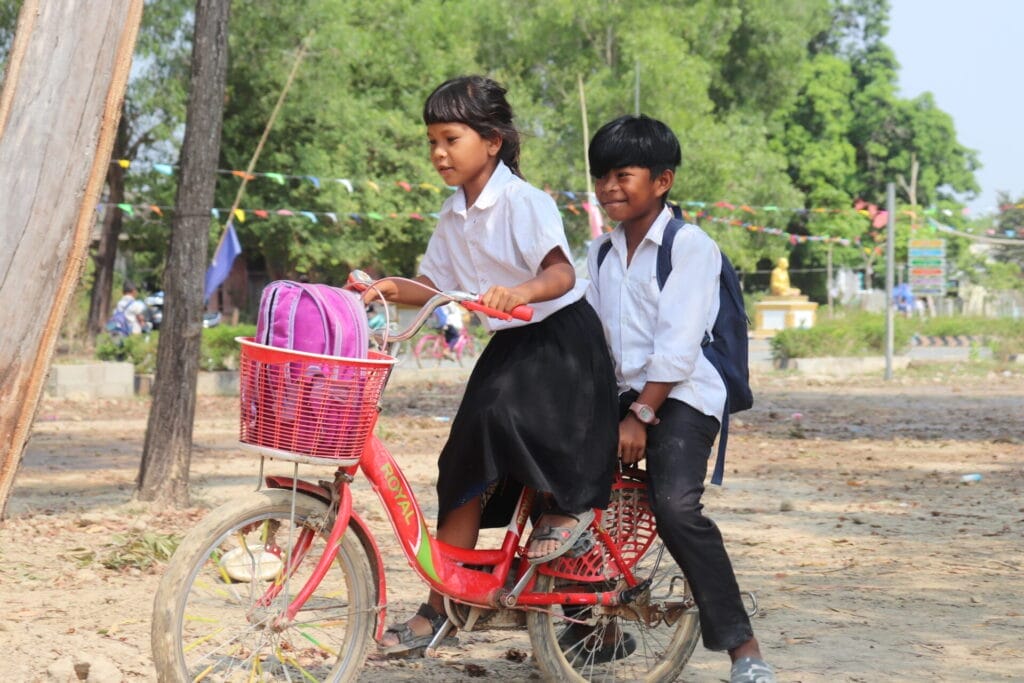
Our main activities in this line of intervention focus on creating a supportive and safe learning environment for every child. We conduct regular community awareness campaigns to promote child rights and the importance of staying in school, while simultaneously training teachers in inclusive pedagogy and child protection principles.
To improve basic hygiene and learning conditions, we provide rural schools with essential learning materials, clean water filters, and toilet repairs. Furthermore, we provide direct student support through scholarship programmes, remedial classes, and targeted home visits, while also ensuring that students in remote areas receive a daily breakfast to improve their overall learning capacity.
Youth Employment & Vocational Training
Since 2020, we have expanded our efforts in basic education and have focused as well on advancing school-to-work transitions by providing vocational training and entrepreneurship opportunities through student-led social businesses and guidance programmes.
Collaborating with experienced local partners like BSDA (Buddhism for Social Development Action), we offer certified technical training that enable vulnerable youth to gain employable skills.
Labour & Social Rights
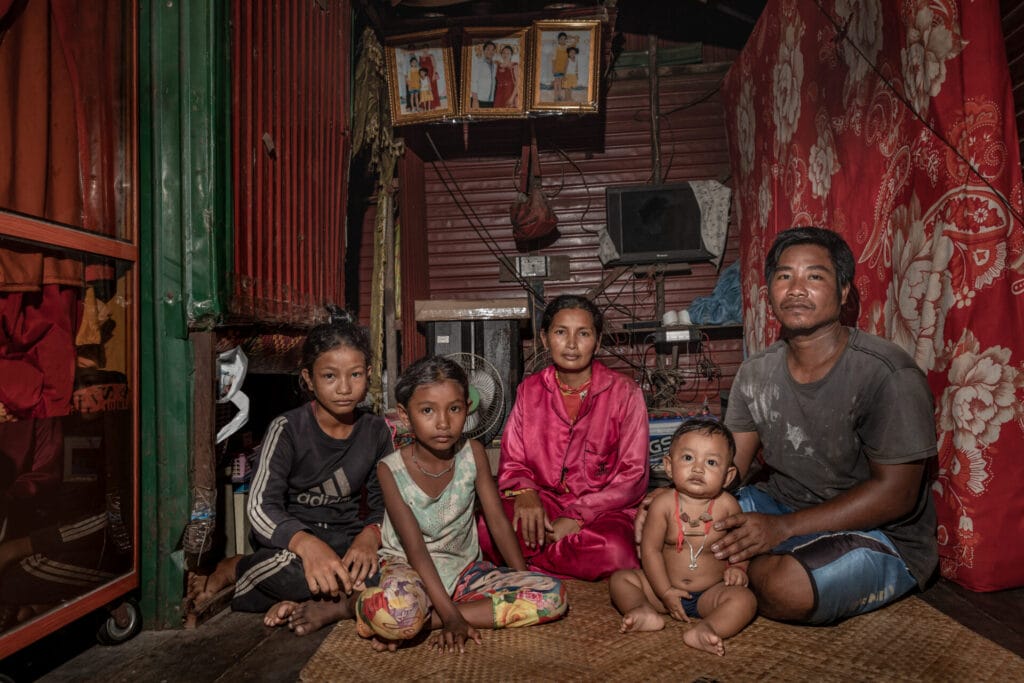
Together with local, national and international stakeholders, we work to enhance workers’ conditions in rubber and banana plantations. Our advocacy focuses on ensuring that labour standards and human rights are integrated, monitored and upheld in policies, regulatory frameworks, programmes, and sector budgets.
Additionally, we work to raise awareness among companies, investors, and other private stakeholders about the costs associated with human rights and labour violations, encouraging a shared commitment to human rights and decent working conditions.
Furthermore, our efforts extend to empower workers. We focus on enhancing the skills of plantation workers, community organisations, unions, and labour rights advocates, by involving them in monitoring compliance with international obligations, reporting violations, participating in political dialogue, and influencing decision-making processes.
Through each of these interconnected interventions, we aim to ensure that the country’s younger generations have the social support, safety, and skills required to become active agents of change, lead sustainable development, and help their communities to thrive.
