

At the end of May, heavy seasonal rains and the release of water from upstream dams in Turkish territory caused a sudden rise in the level of the Euphrates River by up to four meters, leading to severe flooding in northern Raqqa and eastern Deir ez-Zor.
Entire villages, farmland, and essential infrastructure were submerged within a few hours, triggering a full-scale humanitarian emergency. It is estimated that more than 2,200 families have been affected, while around 698 households have been forced to leave their homes, seeking shelter in collective centers or with host communities.
Floods in Syria, limited access to water and health risks
The impact on basic services was immediate and severe: 70 of the 165 water treatment plats in the region are out of service, leaving thousands of people without safe access to drinking water.
The combination of stagnant water and compromised sanitation systems is also increasing the risk of waterborne diseases, further worsening the health situation.
Agriculture devastated and food security at risk
The floods have destroyed vast agricultural areas and irrigation infrastructure, the main source of livelihood for many local families. These losses jeopardize food security in the coming months, in a context already marked by years of crisis.
Access to education has also been affected: emergency conditions and difficulties in reaching the impacted areas are hindering the administration of national exams scheduled for June.
Floods in Syria, our response
Thanks to our established presence in the area (we have been operating in Syria since 2011) and the support of the European Commission (DG ECHO), we were able to activate an emergency response within 24 hours of the critical rise in the river’s water level.
Activities have already reached over 500,000 people and include:
- Protection of water infrastructure: construction of sand barriers around key pumping stations to ensure the continuity of water supply for hundreds of thousands of people.
- Distribution of drinking water: more than 2,700 m³ of safe water delivered by tanker trucks to around 90,000 people left without access to water services.
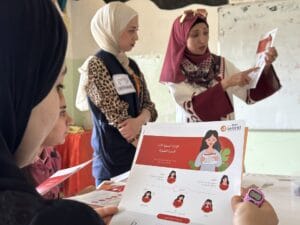
- Provision of essential goods: distribution of hygiene kits, menstrual hygiene materials, and cleaning supplies to the most vulnerable families is ongoing.
Next steps
Although the level of the Euphrates is slowly stabilizing, the emergency is far from over. In the coming days, we will continue providing immediate assistance while preparing the recovery phase.
Our planned actions include:
- continuation of water and essential goods distribution;
- financial support for the most vulnerable displaced families;
- damage assessments and restoration of water infrastructure;
- support for agricultural recovery through the distribution of seeds and materials.